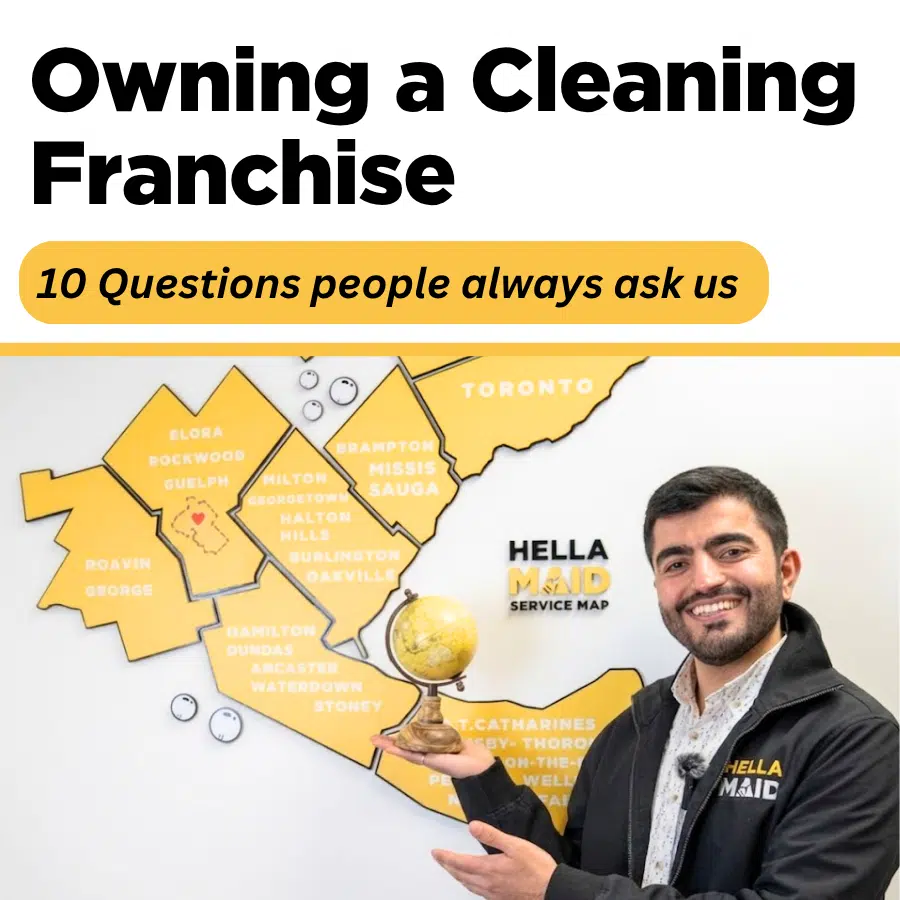
Every week we get on discovery calls with people who think about owning a Hellamaid franchise. The same questions come up. Smart, hard, useful questions, the kind that don’t always get a straight answer in a sales deck. So I’m putting the answers down here once, in the form I’d give them over coffee instead of inside a pitch.
I’m Ahmed. Abdul and I co-founded Hellamaid in Guelph in 2017. We were two engineers who looked at the cleaning industry and saw a fragmented mess that nobody had bothered to actually engineer. Nine years and over 70,000+ homes later, we’re opening up the system to franchise partners across Canada and the US (here’s why we decided to franchise). Here’s our story if you want the longer version. This post is the other thing. The questions you’re probably already turning over in your head.
“Anyone here actually own a cleaning franchise? Is it worth the royalty or are you just paying rent on a logo?” — r/franchise
“How do you tell a real franchise opportunity apart from a glorified MLM pitch?” — r/Entrepreneur
“Canadian here — every cleaning franchise I look at is American with a Canadian flag slapped on. Is that a problem legally?” — r/PersonalFinanceCanada
“What do you wish you’d known before you signed the FDD?” — r/smallbusiness

Is buying a cleaning franchise actually worth it, or should I just start my own?
For most people the math comes down to time and lead flow. A franchise costs more upfront and gives up some autonomy. What you get back is the eighteen months Abdul and I spent in 2017 figuring out what works.
I bootstrapped Hellamaid the hard way. I built the booking platform from scratch. I ran ads that flopped. I hired wrong, I fired late. The reason a franchise model exists is because all of that learning costs money even when there’s no invoice attached. When you start independent, you pay tuition in mistakes. When you franchise, you pay for the syllabus. (If you want to weigh the independent route properly, here’s our full guide on how to start a cleaning business in Ontario, with real costs.)
So when does each one actually win?
If you’ve never run a service business before, I think the franchise math wins. If you’ve run one for five plus years and you already have repeat customers and referrals, I’d honestly tell you not to franchise. You’d be paying for a brand you don’t need.
What does a Hellamaid franchise actually cost, total, not just the franchise fee?
Total estimated initial investment is $65,000 to $120,000 CAD. That’s the franchise fee, training, tech, office supplies, pre-launch marketing, and working capital. Not just the entrance ticket.
People hear “franchise fee” and think that’s the whole cost. It’s not, and any honest franchisor will tell you that. The fee is the smallest line on the page. The bigger numbers are the stuff that gets you actually open and running long enough for bookings to catch up to your spend.
| Cost component | What it actually covers |
|---|---|
| Franchise fee | One-time. Locks in your territory, brand rights, and access to our systems. |
| Training and tech | Onboarding program, software setup, hardware, the platform you’ll run on. |
| Office supplies | Branded uniforms, marketing collateral, basic admin gear. There’s no commercial lease. |
| Pre-launch marketing | Paid ads and a launch campaign in your territory before your doors are technically open. |
| Working capital | The money that keeps you alive while bookings grow into your costs. This is where underbudgeted franchisees fail. |
Why the range is $65k to $120k and not a single number: population density and city competitiveness vary. Launching into Toronto isn’t the same as launching into a smaller Ontario market. Calgary isn’t the same as a suburban BC territory. The range reflects reality, not vagueness.
Visit our Franchise page to view our two ownership models (small market and large market).
Don’t take the bottom of the range as your plan and then scramble when reality lands at the top. Budget at $120k. If you come in cheaper, that’s buffer. If you come in higher, you have a problem you can solve before it becomes one.
What can I realistically make in year one, year two, year three?
Cleaning franchise revenue depends on territory density, marketing spend, and how fast you hire. Year one most franchisees are building the engine. Year two and three are where the recurring revenue compounds.
I’m not going to give you a fake number. The honest answer is most service franchises follow a specific shape. Year one you’re building the team and the recurring book. You spend more than you make. Year two the recurring revenue compounds and your margins start showing up. Year three you either start hiring leadership and scale into a second territory, or you cap out comfortably at owner-operator size.
Industry context worth knowing: across all franchise industries, top performers are dramatically above average. Franchise Business Review’s data on food franchises showed 41% of owners earn under $50K and only 15% earn over $250K. Cleaning is structurally different. It’s recurring, asset-light, and the margins look more like services than restaurants. But the same shape holds. Averages hide enormous variance, and the variance comes from owner behaviour more than territory.
What pulls a Hellamaid unit up: recurring bookings (weekly, bi-weekly, monthly) compound month over month. Move-in/move-out work adds high-margin one-off revenue, especially around the May 1 and July 1 turnover spikes in any major Canadian rental market. Centralized lead gen through hellamaid.ca means you’re not paying for a website that doesn’t convert.
What pulls units down: under-hiring in months three through six, refusing to pay cleaners properly (turnover crashes, reviews tank, recurring book bleeds out), or trying to operate from your phone instead of being in the field during the first ninety days when culture and quality get set.
Build a three-year P&L before you sign anything. Use conservative booking growth: start at ten cleans a week, end of year one at forty to sixty. If the model still works at conservative numbers, you have a real business. If it only works at “year three hockey stick,” walk away.
How does the royalty structure work, and what does it actually pay for?
Hellamaid charges 7% monthly royalty on gross revenue plus 2% to the National Brand Fund. Total ongoing fees are 9% of revenue. The royalty pays for the platform and support; the brand fund pays for national marketing.
Royalties are where most of the franchise complaints on Reddit and franchise forums live. The pattern is always the same: “I’m paying royalties and I’m not getting anything back.” That complaint is sometimes legitimate. Plenty of franchisors do collect royalties and underdeliver. Some of them are out there right now, taking 8% from struggling units and putting it into another sales push.
Here’s the breakdown of what 9% buys at Hellamaid, in concrete terms:
- The booking platform itself: instant quote, smart scheduling, automated reminders, secure payments. We’ve been engineering this since 2017.
- Lead generation that flows to your territory automatically. Hundreds of thousands of customer leads have come through hellamaid.ca over the years and they route by postal code.
- Centralized client support and complaint triage. You don’t take 9pm calls about a missed baseboard. We handle the routine stuff and escalate only what genuinely needs an owner.
- Hiring playbooks, applicant flow, reference-check templates. We’ve hired hundreds of cleaners and we know what filters work.
- Brand assets, ad creative, local launch templates. You don’t pay an agency $5K to design a flyer.
- National marketing campaigns funded by the 2% brand fund.

Cleaning industry royalties typically run 4% to 8%. Anything sub-4% usually means the franchisor isn’t investing in support. Anything above 10% usually means they’re squeezing units. We sit in the middle on purpose because we want units profitable enough to open a second territory, not just barely profitable enough to stay open.
The honest tension nobody talks about: royalties feel heaviest in early years when revenue is small but the platform’s value is huge. They start to feel heavy in year five when you’ve built your own systems and the franchisor’s marginal value flattens. That’s a structural reality of franchising. It’s not a bug, it’s the deal.
Calculate 9% of your year-three projected revenue. That’s your real annual royalty cost. If you’re projecting $500K, that’s $45K a year. Then ask yourself honestly: would you spend $45K a year for the platform, the leads, and the support? If yes, the royalty is fair. If no, this isn’t your model and that’s useful to know now.
Do I get a protected territory, or will Hellamaid open another franchisee in my city?
Yes. Protected territories are part of the franchise agreement. We draw them by household density and market size, not by drawing circles on a map. Your specific terms are in Item 12 of the FDD.
This is the single biggest fear in franchising and it’s a fair one. Cleaning franchise horror stories are full of “the franchisor sold the territory next to mine and now we’re competing for the same Google ads.” It happens. It shouldn’t happen if territories are designed properly.
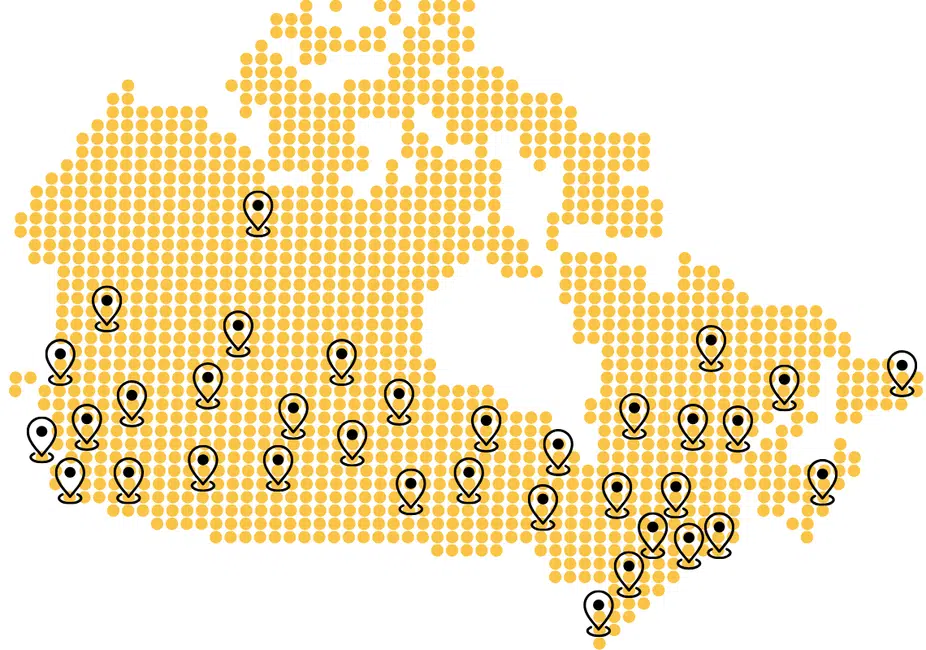
How we draw territories: by household count and target demographic, not by drawing a shape on a map and calling it done. A franchisee in Calgary needs roughly the same number of target households to make the model work as a franchisee in Mississauga, even though the geographies look completely different.
Encroachment from corporate channels is the trickier issue, and it’s worth being specific about. Bookings on hellamaid.ca route to franchisees by postal code automatically. There’s no “house brand” undercutting franchisees on the same Google search in the same territory. The lead engine works for you, not against you.
The harder part is what happens when an adjacent territory gets sold. At some point your neighbouring territory will have a new franchisee. We try to brief existing franchisees before that happens and let them have first option on adjacent expansion. That’s not a formal right written into the agreement. It’s a practical thing we do because pissed-off franchisees don’t refer their friends.
Read Item 12 of the FDD carefully. It defines what your territory protection covers and what it doesn’t. Anything that’s “policy” but not in the agreement isn’t legally enforceable. Don’t sign on a verbal promise, from us or any other franchisor.
What’s in the FDD and what should I focus on as a Canadian buyer?
The Franchise Disclosure Document is the legally required snapshot of every fee, lawsuit, and franchisee turnover number. Under Ontario’s Arthur Wishart Act, you get it 14 days before signing. Read Items 3, 19, and 20 first.
Five Canadian provinces regulate franchise disclosure: Ontario, Alberta, Manitoba, Prince Edward Island, and New Brunswick. Ontario’s Arthur Wishart Act is the best-known. It requires the franchisor to give you a complete Franchise Disclosure Document at least fourteen days before you sign anything or pay anything beyond a small refundable deposit.
If we don’t comply, you have specific remedies:
- 60 days to rescind the agreement if the FDD is materially incomplete.
- 2 years to rescind if the FDD was never delivered at all.
That’s not a guideline. It’s statutory. Any Canadian franchise lawyer will tell you the same.
The three FDD items I’d read before everything else:
| FDD Item | What it tells you |
|---|---|
| Item 3 — Litigation | Every lawsuit involving the franchisor and senior officers in the past several years. Patterns matter more than counts. |
| Item 19 — Financial Performance | FPRs aren’t required, but if they’re provided, they tell you what existing units are actually doing. If they’re not provided, ask why. |
| Item 20 — Franchisee List & Turnover | How many franchisees joined, left, or were terminated in the last three years. Plus contact info for franchisees who exited last year — call them. |
A clean FDD won’t have zero lawsuits or zero turnover. That’s actually a yellow flag. It usually means the brand is too new to have hit anything real. What you want is honest numbers and a franchisor who can talk through them without getting defensive.
The US-franchise-in-Canada problem worth flagging: a US FDD does not satisfy Canadian provincial law. If you’re looking at a US brand operating up here, ask for the Canadian FDD specifically. If they don’t have one and they’re trying to use the US version, that isn’t a regulatory shortcut. It’s a future rescission claim sitting in your filing cabinet. The Canadian Franchise Association is a useful starting point for vetting whether a brand is set up properly for Canada.
Hire a Canadian franchise lawyer to review the FDD before you sign. It’s a few hundred dollars. Compared to a $100K+ investment, that’s the cheapest insurance you’ll ever buy. Don’t lean on a generalist business lawyer. Find someone whose practice is at least thirty percent franchise law.
How long does it take to launch, and what does ramp-up actually look like?
From signed agreement to first paying customer is typically 60 to 90 days. From first customer to break-even is usually 4 to 6 months, depending on how fast you hire and how disciplined you are with the launch playbook.
Before any of that, there’s the path to signing itself. Our process is nine steps and it’s intentionally not fast:
- Franchise overview call
- Marketing support overview
- Operations and tech overview
- Financial modeling (your numbers, not ours)
- Founders call (you talk to me and Abdul)
- Franchise Disclosure Document review
- Franchise partner validation (you talk to existing franchisees without us in the room)
- Discovery Day at our office
- Franchise agreement signing
That whole sequence usually takes six to twelve weeks. We’ve turned away prospects who tried to skip steps. The point of the process isn’t to drag things out. It’s to make sure both sides know what they’re signing up for. Franchise mismatches are expensive for everyone.
Once the agreement is signed, the launch sequence looks roughly like this:
- Weeks 1–3: Training, software setup, branded materials shipped, your first hires lined up.
- Weeks 4–6: Hiring two to four cleaners, building local content, finalizing pre-launch marketing.
- Weeks 7–9: Pre-launch ads live, first bookings start hitting the platform.
- Weeks 10–12: Steady booking flow, first few recurring clients on the books.
The ramp curve is what kills underprepared franchisees. Bookings grow slower than expenses for the first two to three months. If you haven’t budgeted working capital to cover that gap, you start cutting corners (under-hiring, skimping on marketing, settling on the first warm body who applies) and everything slows down. That’s the failure mode, and it’s preventable.
Plan for six months to break-even, not three. If you hit it faster, you’re ahead. If you don’t, you have runway and you don’t make desperate decisions about hiring or pricing that you’d regret later.
Can I run this semi-absentee, or am I going to be cleaning houses myself?
You don’t need to clean houses. Most Hellamaid franchisees are owner-operators in the first 6 to 12 months, managing a small team, not pushing a mop. Semi-absentee is realistic by month 12 to 18 once your team is stable.
I’m honest about this one because it scares me when prospects ask it too eagerly. The people who lead with “can I do this without being involved?” before they’ve even started usually don’t make it. Service businesses are built by owners who care about the work, even when they’re not personally doing it. A cleaning franchise owned by someone who’s “checked out” leaks customers and team members in a year.
Plan to be owner-operator for the first year. If you want to be semi-absentee from day one, this isn’t the right business. Any service franchise that promises you semi-absentee from day one is selling a fantasy worth walking away from.
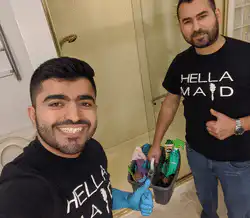 In the earlier years, me and Abdul sometimes stepped in and cleaned homes ourselves
What support do I actually get from Hellamaid HQ — beyond a logo and a manual?
The booking platform, automated lead routing, centralized client support, hiring playbooks, marketing creative, and direct access to me and Abdul during your launch year. You don’t get magic. You get the system we use ourselves.
This is the question I’d want to interrogate hardest if I were on your side of the table. Plenty of franchisors hand you a manual on day one and disappear by month four. Here’s what’s actually real on our end, in concrete terms:
The platform. Instant online quote, smart scheduling that optimizes routes, automated reminders that drastically cut no-shows. We’ve put years of engineering into this. You don’t pay to build it. You pay to use it.
Lead generation. Hundreds of thousands of leads have come through hellamaid.ca since 2017. That funnel routes by territory automatically. You inherit it on day one. You’re not starting from a blank Google Ads account hoping for the best. I wrote a separate post on where cleaning franchise leads actually come from if you want the deeper version on how the system was built.
Client support. One central help desk handles routine client questions and complaint triage (here is how that works from the client’s side). You get involved on the escalations that genuinely need an owner. This is the most overlooked piece of franchising. You are not on the phone at 9pm with a client about a wine spill on their couch.
Hiring playbook. We’ve hired hundreds of cleaners. We know what the screening filter should look like, what the Living Wage commitment does to retention (it cuts turnover dramatically; that’s not a feel-good detail, it’s unit economics), what to test for in onboarding.
Founders access. For your first year, you have direct access to me and Abdul. Not “submit a ticket and wait.” Real conversations. After year one, support shifts to the franchise team. The foundation is set by then.
What we deliberately don’t do: we don’t hand you a marketing playbook and expect you to execute it without local instincts. We don’t promise pricing is identical in every city. We don’t tell you to ignore your gut about a hire. The system is the floor, not the ceiling. If you treat our system as your finished business, you’ll plateau. If you treat it as your starting platform, you compound.
When you talk to existing franchisees during validation (step 7 of our path), don’t ask “is the support good?” Ask “what’s something corporate did for you in the last sixty days?” Specifics expose what’s real. Vague positive answers expose what isn’t. (I put the full list of questions in our franchise buyer’s checklist.)

Abdul, Ahmed, Lorna (Operations Manager) and Hannah (HR Manager)
What happens if I want out — can I sell my Hellamaid franchise, or am I locked in?
You can sell or transfer your franchise subject to the agreement’s transfer terms. Hellamaid has a right of first refusal. Term length, non-compete scope, and transfer fees are spelled out in Item 17 of the FDD.
This is the question almost nobody asks until it’s late. They should ask it on day one, because the exit you eventually want is built during ownership, not at the moment you decide to leave.
What can happen at exit:
- Sell to a third party (we approve the buyer to make sure they fit the system).
- Sell back to Hellamaid (we have right of first refusal under the agreement).
- Transfer to a family member, with approval.
- Let the term expire and walk away, subject to the non-compete restrictions in your agreement.
What’s in the agreement that affects how the exit actually plays out:
- Term length (multi-year, typical for service franchises).
- Renewal options at end of term.
- Non-compete scope (usually a defined period post-exit, within and adjacent to your territory).
- Transfer fee paid to the franchisor on resale.
- Approval rights over a buyer.
What sells well in resale: a franchise with a steady recurring book, a stable cleaning team, clean books, and documented systems. What doesn’t sell: a unit with declining bookings, lawsuits in the file, or no documentation of who does what. The most boring possible answer to “how do I maximize my exit?” is the right one: run a clean operation for several years and the resale takes care of itself.
The blunt version: you’re signing a multi-year commitment. If you’re not prepared for that, this isn’t the right opportunity for you. There are franchises with shorter terms and easier exits. They typically also have less support, smaller royalties, and weaker brands. The trade-off is real and it’s structural.
When you read Item 17 of the FDD (renewal, termination, transfer), highlight every clause about exit. Then ask the franchisees on your validation calls (step 7) what an actual exit has looked like in our system. The agreement tells you what’s allowed. Existing franchisees tell you what’s typical.
Ready to keep going?
If these answers lined up with how you’re thinking, the next step is straightforward: read the franchise overview, then schedule a discovery call with our team. No pressure, no “limited spots” nonsense.