Key Points
White painted cabinets stay bright with routine cleaning using vinegar or mild cleaner; for tough stains, apply a gentle baking soda paste.
Wood cabinets need regular vinegar-and-water cleaning, with vinegar and salt or baking soda pastes for stubborn stains, always followed by polishing.
Plastic laminate cabinets are less porous but prone to scratches, so use mild detergent for routine care and baking soda paste or acetone (tested first) for tougher stains.
Stains set in place are the worst thing that can happen to the aesthetic of kitchen cabinets. Perhaps you were preoccupied and forgot about the oil leak for a while, or maybe you didn’t even notice the trickle of pasta sauce until a considerable amount of time had passed after it had occurred.
In either case, you need to remove those stains since you will soon have guests over, and you do not want your kitchen to be embarrassing. Thankfully, there are a variety of methods that you can use to clean your kitchen cabinets and restore their brilliance.
How to Remove Stains from Kitchen Cabinets: A Complete Material-Specific Guide
The professional cleaning company Hellamaid provides cleaning tips for you to easily remove stains on your kitchen cabinet, whether it is white painted, wood, or plastic laminate. Continue reading to learn how.
1. Cleaning White Painted Kitchen Cabinets
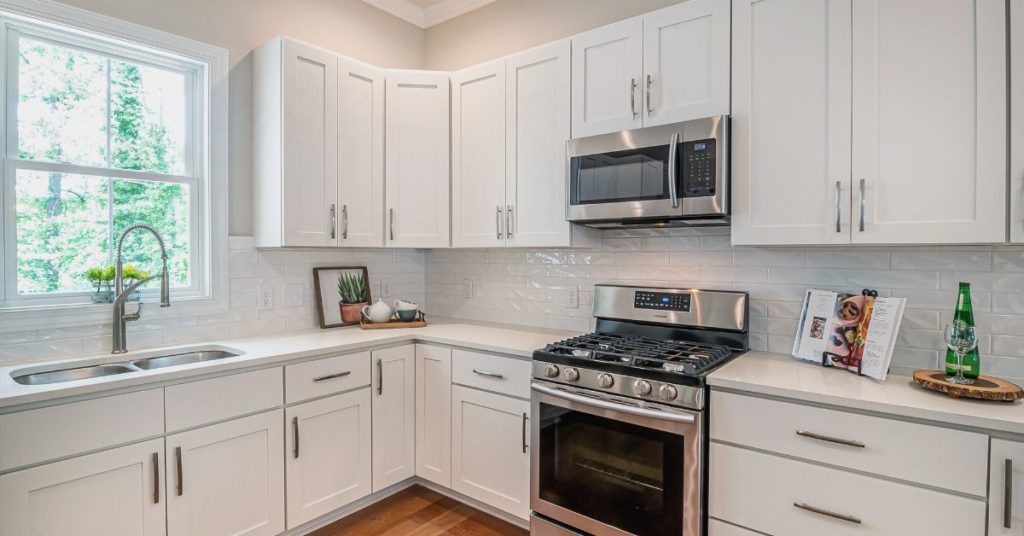
White cabinets create an illusion of space and brightness, but they’re also notorious for showing every mark and developing yellowish tinges over time. This discoloration typically results from cooking oils, heat exposure, or natural paint aging, but with the right approach, you can keep them looking pristine.
Daily and Weekly Maintenance
Prevention beats restoration every time. The airborne grease and steam from cooking settle on cabinet surfaces throughout the day, creating a film that attracts more dirt.
Quick Daily Cleaning Process:
- Spray cabinets with all-purpose cleaner or white vinegar solution
- Work on one cabinet at a time using gentle circular motions
- Use a non-abrasive sponge for initial cleaning
- Follow with a water-dampened sponge to remove residue
- Dry immediately with a clean microfiber cloth
This two-step rinse process prevents cleaner buildup that can leave streaks or attract more dirt over time.
Tackling Stubborn Stains and Discoloration
When regular cleaning isn’t enough, a gentle abrasive approach works wonders on white painted surfaces.
| Cleaning Method | Materials Needed | Application Time | Best For |
|---|---|---|---|
| Baking Soda Paste | Baking soda + water | 3-5 minutes | General stains, yellowing |
| Vinegar Paste | White vinegar + baking soda | 2-3 minutes | Grease stains, food spots |
| Gentle Scrubbing | Soft toothbrush + paste | As needed | Textured surfaces, corners |
Apply your chosen paste to problem areas and let chemistry do most of the work. Gentle circular scrubbing with a soft-bristled toothbrush helps lift stubborn spots without damaging the paint finish. Always rinse thoroughly and dry completely to prevent water damage.
2. Restoring Wood Kitchen Cabinets
Wood cabinets bring natural warmth to kitchens but require more delicate care than painted surfaces. The wood grain and protective finish can trap particles, leading to dullness over time. Success lies in using wood-friendly methods that preserve the finish while removing buildup.

Regular Wood Cabinet Care
Vinegar-based solutions are wood’s best friend, they cut through grease without harsh chemicals that might damage delicate finishes.
Your Go-To Wood Cleaning Solution:
- Equal parts white vinegar and warm water
- Add 2-3 drops of liquid dish soap for heavy grease
- Transfer to spray bottle for easy application
Apply the solution lightly (avoid oversaturating wood), let it work for about two minutes, then wipe with a soft cloth following the wood grain direction. Pay special attention to hardware and decorative details using a soft toothbrush dipped in your cleaning solution.
The most important step? Always finish with a clean, slightly damp cloth to remove all cleaning residue, then dry thoroughly before closing doors to prevent moisture damage.
Removing Tough Stains from Wood Surfaces
Here are some stain types on the wood and how to clean them:
| Stain Type | Cleaning Paste | Method | Important Notes |
|---|---|---|---|
| Sticky foods (syrup, honey) | Vinegar + salt paste | Gentle toothbrush scrubbing | Follow wood grain direction |
| General food stains | Baking soda + water | Damp sponge application | Test in hidden area first |
| Grease buildup | Dish soap + warm water | Soft cloth, circular motions | May need multiple treatments |
Remember that patience trumps pressure with wood surfaces. Let the paste work for several minutes before gentle scrubbing, and never use steel wool or aggressive abrasives that can scratch the finish permanently.
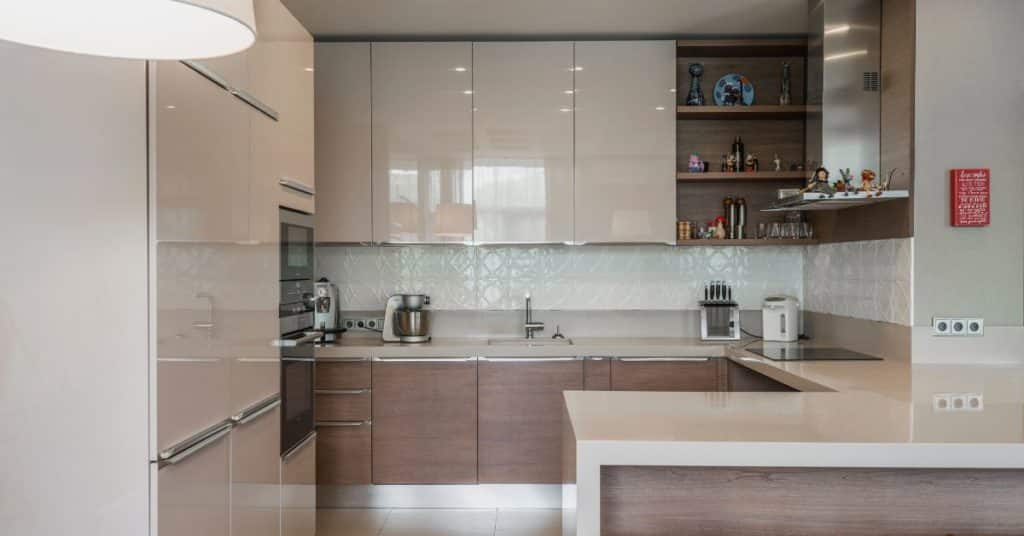
3. Maintaining Plastic Laminate Kitchen Cabinets
Laminate cabinets offer a practical advantage in stain removal, their non-porous surface prevents most substances from penetrating deeper than the surface layer. However, this same durability can work against you if you use harsh cleaning methods that scratch the finish.
Everyday Laminate Cleaning
The beauty of laminate cleaning lies in its simplicity. Most everyday stains respond to gentle methods that protect the surface integrity.
Basic Laminate Cleaning Formula:
- ½ ounce liquid dish soap per gallon of warm water
- Soft, non-abrasive cloth or sponge only
- Gentle pressure, let the solution do the work
This mild approach effectively handles dairy spills, fingerprints, food residue, and light grease while allowing you to assess whether tougher methods are actually necessary.
Advanced Stain Removal for Laminate Surfaces
Fruit juices, wine, and other colorful liquids can leave visible marks that require more targeted treatment.
| Stain Category | Treatment Method | Contact Time | Application Tips |
|---|---|---|---|
| Colored liquids (juice, wine) | Baking soda paste | 5 minutes | Keep moist with water spray |
| Oil-based stains | Dish soap solution | 2-3 minutes | Use circular motions |
| Stubborn marks | Acetone (test first!) | 30 seconds | Dab with cloth, don’t pour directly |
For the most challenging stains, acetone-based nail polish remover can be effective, but it requires careful handling. Always test on an interior door edge first, apply with a cloth rather than directly, and work in a well-ventilated area. Follow immediately with your standard soap solution to remove any solvent residue.
Remember that consistent maintenance prevents the need for aggressive chemical cleaning methods and helps preserve your cabinets’ appearance and value over time.
Conclusion
Kitchen cabinets, whether painted, wooden, or laminate, take the brunt of everyday cooking and handling. With the right cleaning routine, you can prevent stains from setting in and keep them looking fresh for years. Gentle, consistent care using safe household solutions is usually enough, but tougher stains sometimes need more time, patience, and the right technique.
That said, deep cleaning cabinets; especially wood and large kitchen setups, can be tiring and time-consuming. This is where professional help makes all the difference.
Why Trust Hellamaid for Your Kitchen Cleaning
At Hellamaid, we know that the little details, like spotless cabinets, have a big impact on how welcoming your kitchen feels. Our cleaning professionals are trained, insured, and trusted across Canada, delivering reliable service with attention to detail and care for your home.
Whether it’s stubborn grease, getting ready for guests, or freeing up your time, Hellamaid brings the right tools and expertise. Our proven methods and professional care leave your cabinets, and your home, shining without the stress. Book now!