Key Points
- Cats don’t pee on bedding out of spite; it’s often due to health problems, stress, litter box issues, or territorial behaviour.
- Follow six easy steps to clean a duvet with cat pee: act fast, blot the area, pre-treat the stain, soak the duvet, wash and rinse thoroughly, and air dry completely.
- Completely remove cat pee smell using baking soda, UV light checks, and professional odour eliminators for stubborn spots.
- Prevent future accidents by keeping litter boxes clean, reducing stress, maintaining vet checkups, and protecting your bedding with washable cover
There’s nothing like the comfort of a clean, cozy duvet, until you notice that unmistakable smell and damp spot left behind by your cat. If you’re wondering how to clean duvet with cat pee, take a deep breath, you’re in the right place. Accidents happen, especially with our furry companions, but that doesn’t mean your bedding is ruined for good.
With a little patience and the right approach, you can remove the stain, get rid of the odour, and make your duvet feel fresh again. Let’s walk through it together.
Why Cats Pee on Bedding
Understanding your cat’s behavior is the first step to preventing future accidents.
Cats don’t urinate on bedding out of spite. There’s always a reason behind this behaviour:
Understanding your cat’s behaviour is the first step to preventing future accidents. Cats don’t urinate on bedding out of spite, there’s always an underlying reason.
| Cause | Possible Reasons |
|---|---|
| Health Problems |
|
| Emotional Stress |
|
| Litter Box Issues |
|
| Territorial Behaviour |
|
If accidents happen frequently, schedule a vet visit. Medical issues should be ruled out or treated before addressing behavioural causes.
Step-by-Step Guide: How to Clean Duvet with Cat Pee

Here’s your complete roadmap to removing cat urine completely.
Step 1: Act Fast
Speed is everything when dealing with cat pee. Fresh accidents come out much easier than dried ones.
Remove the duvet cover immediately. Check if the urine has soaked through to the duvet filling. The faster you start cleaning, the better your results will be.
Step 2: Blot the Area
This step is crucial, never rub or scrub the urine initially.
Here’s the right way to blot:
- Use clean towels or paper towels
- Press down firmly to soak up liquid
- Work from the outside edges toward the center
- Keep replacing towels until they come up dry
Rubbing pushes urine deeper into the fibers. Blotting pulls it out instead.
Step 3: Pre-Treat the Stain
Pre-treatment breaks down the urine crystals that cause lasting odours.
Best Option: Enzyme Cleaner
Enzyme cleaners are specifically made for pet accidents. They contain special proteins that eat away at urine crystals.
- Pour enzyme cleaner over the entire stained area
- Make sure it soaks through completely
- Wait 15-30 minutes for it to work
Budget-Friendly Option: White Vinegar
Mix equal parts white vinegar and water in a spray bottle.
- Spray the mixture generously over the stain
- Let it sit for 10-15 minutes
- The acid in vinegar neutralizes ammonia in cat urine
Step 4: Soak the Duvet (If Machine-Washable)
Most modern duvets can go in the washing machine. Always check your care label first.
Fill your bathtub with cool water. Add either enzyme cleaner or a cup of white vinegar to the water. Submerge the stained area completely.
Let it soak for 30 minutes to an hour. Gently move the duvet around every 15 minutes. This soaking time allows the cleaning solution to penetrate deep into the filling.
Step 5: Wash and Rinse
Now it’s time for a thorough wash to remove all traces of urine and cleaning products.
| Washing Method | Instructions |
|---|---|
| Machine Washing | – Use cold water (hot water sets urine stains permanently). – Add your regular detergent plus an enzyme cleaner. – Choose a gentle cycle for down duvets. – Run an extra rinse cycle to ensure all residue is gone. |
| Hand Washing | – Fill a clean tub with cold water and detergent. – Gently squeeze the duvet without twisting. – Drain dirty water and refill with clean water. – Keep rinsing until the water stays clear. |
Step 6: Air Dry Completely
Proper drying is essential for preventing mold and eliminating odors completely.
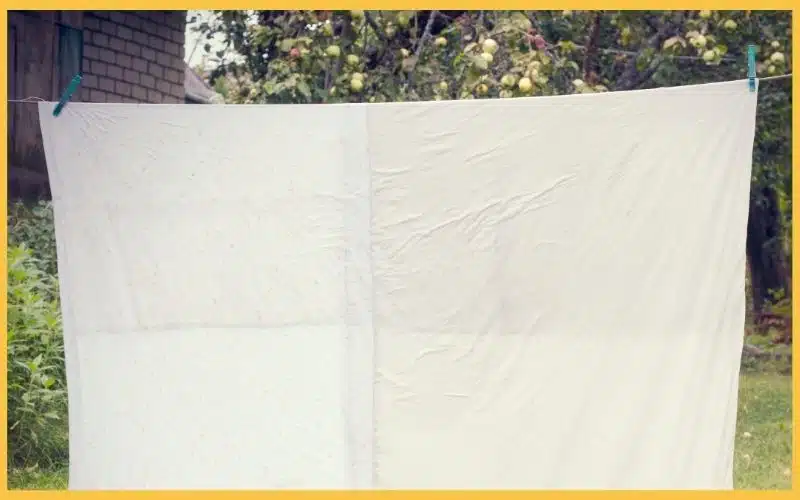
The best drying method is outside in fresh air and sunlight. Hang your duvet on multiple clotheslines for even drying. Flip it every few hours.
If you must dry indoors, use fans to circulate air. Make sure the duvet is completely dry before putting it back on your bed. Damp spots can develop mold or mildew.
Important: Never use high heat. It can damage delicate filling and actually set any remaining odors.
What If Your Duvet Isn’t Machine-Washable?
Some duvets need special care due to their materials or size.
These duvets usually need professional cleaning:
- Luxury down-filled duvets
- Silk or wool-filled bedding
- Oversized king or California king duvets
- Vintage or delicate materials
You can try spot cleaning at home:
- Mix a small amount of enzyme cleaner with water. Apply it only to the affected area using a clean cloth. Blot with a damp cloth to remove the cleaner.
- Use a fan to speed up drying. Once completely dry, sprinkle baking soda over the area and vacuum it up after 24 hours.
Always test any cleaning solution on a hidden corner first. This prevents damage or color bleeding on visible areas.
How to Completely Remove Cat Pee Smell?

Sometimes odors linger even after the stain disappears. Here’s how to eliminate them completely.
1. The Baking Soda Method
Baking soda naturally absorbs odors without adding artificial fragrances.
- Sprinkle a generous layer over the cleaned area
- Let it sit for 24 hours
- Vacuum thoroughly
- Repeat if you still smell anything
2. Use a UV Light to Find Hidden Spots
Cat urine glows under blacklight, even when you can’t see stains. Check your entire duvet with a UV light in a dark room. Mark any glowing spots for extra treatment.
3. Professional Odor Eliminators
Choose products specifically designed for cat urine. Avoid products that just mask odors with fragrances – cats can still smell the original urine underneath.
Follow the product instructions exactly and allow proper drying time. Cats have much stronger noses than humans, so complete odor removal prevents repeat accidents.
Prevention Tips to Avoid Future Accidents
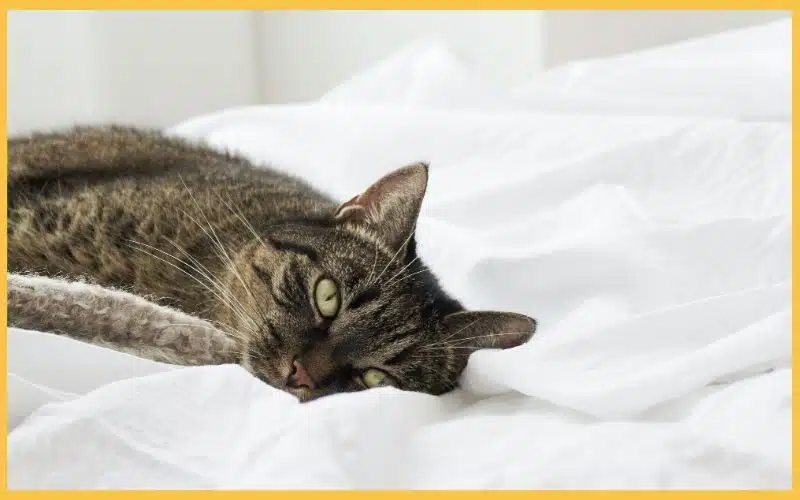
Preventing accidents is easier than cleaning them up.
| Tip | What to Do |
|---|---|
| Keep Litter Boxes Clean and Available |
|
| Monitor Your Cat’s Health |
|
| Reduce Stress in Your Home |
|
| Protect Your Bedding |
|
According to veterinary behavior studies, stress significantly increases litter box problems in cats. Managing your cat’s anxiety is key to preventing future accidents.
Frequently Asked Questions
Here are additional common questions related to cleaning a duvet with pets’ pee:
FAQ#1: Can I use regular detergent to clean cat pee from a duvet?
No. Regular detergent won’t remove the urine smell completely. Use an enzyme cleaner or add an enzyme booster to break down the urine crystals.
FAQ#2: How do I know if cat pee soaked into the duvet filling?
Check for damp spots and lingering odour after cleaning. If it still smells or feels wet, the pee likely reached the filling, you may need a deep soak or professional cleaning.
Conclusion
Cleaning cat pee from your duvet doesn’t have to ruin your day or your bedding. Quick action, the right cleaning products, and thorough drying will get your duvet back to perfect condition.
Remember that enzyme cleaners work better than regular detergents for breaking down urine crystals. Complete odor removal takes patience, but it’s worth the effort to prevent repeat accidents.
Most importantly, look into why the accident happened in the first place. Addressing medical issues or stress factors protects both your cat’s health and your favorite bedding.
Get Your Fresh Sheets Back, Without the Stress
If you’re tired of scrubbing and want a hand with pet messes or deep cleaning, Hellamaid’s professional cleaning services can help. We offer trusted, reliable cleaning for homes and condos in your area.
Book a cleaning near you today and enjoy a fresher, more pet-friendly home!