Key Points
- The two most common types of shower mold are black and pink mold. While, vinegar and baking soda are the natural, safe, and most cost-effective solutions for removing them.
- To clean mold effectively from your shower, you must: (1) gather your supplies, (2) ventilate the area, (3) prepare the solution, (4) spray the affected spots, (5) apply baking soda paste, (6) scrub thoroughly, and (7) finish by rinsing and wiping down.
- For persistent or recurring mold, hiring professional cleaners like Hellamaid can provide a safe and lasting solution.
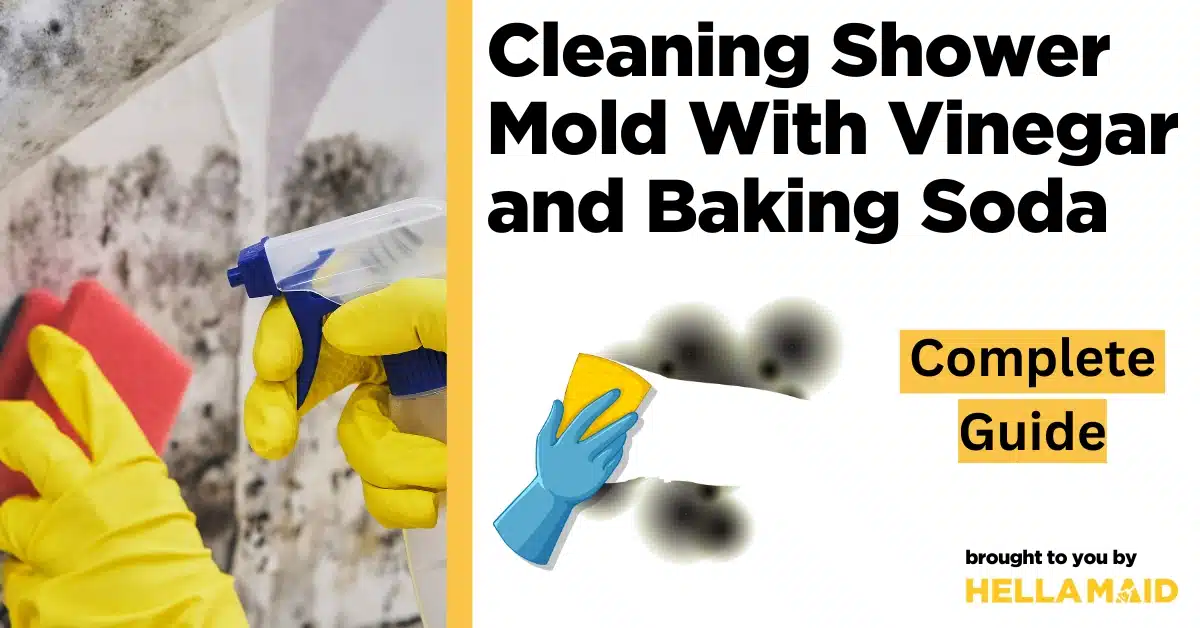
When it comes to bathroom maintenance, few issues are as persistent and frustrating as shower mold. The unsightly black spots that tend to accumulate on grout and tiles not only detract from the aesthetic appeal of your bathroom but can also pose health risks. Fortunately, there’s a natural and cost-effective solution, cleaning shower mold with vinegar and baking soda.
In this comprehensive guide, we’ll delve into the benefits of using these common household items, providing you with a step-by-step approach to bid farewell to shower mold.
Types of Shower Mold
Before diving into the step-by-step guide for cleaning shower mold with vinegar and baking soda, let’s take a closer look at the various types of mold that commonly plague our bathrooms. Understanding these culprits will not only help you identify the specific mold you’re dealing with but also tailor your cleaning approach for maximum effectiveness.
Shower mold comes in different forms, with some being more prevalent than others. The two most common types encountered in bathrooms are:
1. Black Mold (Stachybotrys chartarum)
Known for its dark greenish-black appearance, black mold is notorious for its potential health risks. While uncommon, it thrives in areas with consistent moisture and low ventilation.
2. Pink Mold (Serratia marcescens)
Despite its misleading name, pink mold can appear in various colors, including pink, orange, or red. It typically grows in damp, soapy areas, particularly in a bathroom, knowing how to clean pink mold is crucial.
How to Identify The Mold Type?
Differentiating between mold varieties is crucial for effective treatment. Here are some key characteristics to help you identify common shower molds:
- Color: As mentioned, black mold is dark greenish-black, while pink mold exhibits various shades of pink, orange, or red.
- Texture: Black mold often has a slimy or fuzzy texture, while pink mold tends to form a thin, biofilm-like layer.
- Location: Black mold thrives in consistently damp areas, such as grout lines and corners, while pink mold is commonly found on shower curtains, tiles, and even in the water reservoir of your showerhead.
The Power of Cleaning With Vinegar and Baking Soda
Vinegar and baking soda are the top natural cleaning solutions that you can use, and here’s why:
1. Why Vinegar Works Wonders
White distilled vinegar is a powerful natural cleaner with germ-fighting properties. It kills mold, bacteria, and germs while staying eco-friendly. Its acetic acid breaks down mold and helps keep it from coming back.
2. The Baking Soda Advantage
Baking soda, or sodium bicarbonate, is a versatile cleaning agent known for its gentle abrasive properties. When combined with vinegar, it forms a powerful cleaning paste that not only eliminates mold but also helps in scrubbing away stains and grime. Baking soda is non-toxic, making it a safe option for households with pets and children.
Step-by-Step Guide to Cleaning Shower Mold
Below are the complete instructions on how you can fully remove mold from your shower:
Step 1. Gather Your Supplies
Before embarking on your mold-cleaning journey, make sure you have the necessary supplies on hand. For the step-by-step process, you’ll need:
- White distilled vinegar
- Baking soda
- Spray bottle
- Old toothbrush or scrub brush
- Microfiber or sponge
- Rubber gloves
Step 2. Ventilate the Area
Proper ventilation is important when cleaning. Ensure the bathroom is well-ventilated by opening windows or turning on the exhaust fan. This not only reduces exposure to fumes but also enhances the effectiveness of the cleaning process.
Step 3. Prep the Cleaning Solution
In a spray bottle, mix equal parts white distilled vinegar and water. For optimal results, use one cup of each. The vinegar’s antimicrobial properties combined with water’s dilution ensure a powerful yet safe solution. Shake the bottle well to thoroughly blend the ingredients.
Step 4. Spray the Affected Areas
Thoroughly saturate the mold-affected areas with the vinegar solution. The equal parts mixture ensures a potent cleaning solution. Allow the solution to sit for at least 10-15 minutes, giving the vinegar ample time to break down the mold.
Step 5. Apply the Baking Soda Paste
While the vinegar is working its magic, create a paste with baking soda and a small amount of water. Aim for a thick, spreadable consistency. Use approximately half a cup of baking soda for this mixture. Apply the paste directly onto the moldy areas, concentrating on grout lines and corners.
Step 6. Scrub Away the Mold
Equip yourself with an old toothbrush or a scrub brush. Gently scrub the moldy surfaces using circular motions. The combination of vinegar and baking soda will create a fizzing reaction, aiding in the removal of mold particles. For persistent mold, consider repeating the process or allowing the solution to sit longer.
Step 7. Rinse and Wipe Down
Once the mold has been effectively scrubbed away, rinse the treated area with water. Use a microfiber cloth or sponge to wipe down the surfaces, ensuring any residual cleaning solution is thoroughly removed. This step is crucial to prevent slips due to the slippery nature of the baking soda paste.
Safety Tips When Cleaning Shower Mold
While cleaning shower mold with vinegar and baking soda is a natural and effective solution, it’s essential to prioritize safety during the process. This subheading explores key safety tips to ensure a hazard-free cleaning experience for you and your household.

1. Use Protective Gear
Consider wearing rubber gloves to protect your hands from the cleaning solution. Vinegar, while safe for most surfaces, can cause skin irritation in some individuals. Gloves act as a barrier, keeping your skin shielded from any potential irritation.
2. Avoid Mixing with Harsh Chemicals
While vinegar and baking soda are safe when used individually or together, avoid mixing them with other cleaning products that may contain harsh chemicals. Combining certain substances can create toxic fumes, posing a risk to your health. Stick to the recommended vinegar and baking soda mixture for optimal safety.
3. Protect Your Eyes
If you’re working with the cleaning solution overhead or there’s a possibility of splashing, consider wearing safety goggles. This extra precaution helps protect your eyes from any accidental contact with the cleaning solution.
4. Keep Pets and Children Away
During the cleaning process and while the solution is sitting, ensure that pets and children are kept away from the treated areas. While vinegar and baking soda are generally safe, it’s best to prevent any accidental ingestion or contact during the cleaning process.
5. Rinse Thoroughly
After scrubbing away the mold, ensure you thoroughly rinse the treated areas with water. This step is crucial to remove any residual cleaning solution, preventing slips due to the slippery nature of the baking soda paste.
6. Dispose of Waste Properly
Properly dispose of any used materials, including gloves and cleaning cloths, in a sealed trash bag. This prevents any potential contact with mold spores or remnants of the cleaning solution.
7. Store Materials Safely
Store vinegar, baking soda, and cleaning tools in a safe place, away from the reach of children. This not only ensures their longevity but also prevents any accidental spills or ingestion.
Conclusion
Cleaning shower mold with vinegar and baking soda is not only effective but also an eco-friendly and budget-friendly solution. By harnessing the power of these common household items, you can bid farewell to stubborn mold and enjoy a cleaner, healthier bathroom.
Remember to follow the step-by-step guide and implement this on your comprehensive bathroom cleaning checklist to ensure a long-lasting, mold-free shower. Say goodbye to the scourge of shower mold and hello to a fresh, revitalized bathroom!
Say Goodbye to Shower Mold with Hellamaid
When the scrubbing gets tiring or the stains keep coming back, it’s a sign to call in the experts. A clean, healthy bathroom isn’t just about appearance, it’s about creating a space where you can truly relax without worrying about hidden health risks. That’s where Hellamaid comes in!
Our experienced cleaners know how to tackle tough bathroom mold safely and effectively, giving you back a spotless shower and peace of mind. Instead of spending hours battling stubborn stains, let us handle the cleaning hard work while you enjoy a fresh, welcoming home.